
Tennessee lawmakers are weighing whether to fund clinical trials of ibogaine, a psychedelic compound advocates say could help veterans and others with PTSD and addiction.
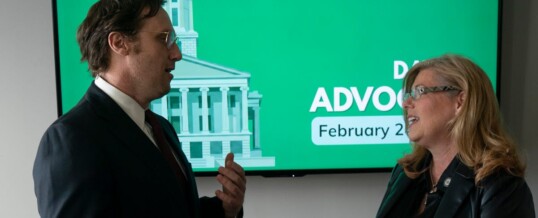
The Helping Open Pathways to Effective (HOPE) Treatment Act was introduced in January and remains under consideration in both Senate and House committees. Advocates rallied for action on the proposal at the state Capitol Feb. 24.
Ibogaine, pronounced i-bow-gain, is illegal for use in the United States, but a growing body of evidence indicates its promise treating the effects of alcoholism, drug addiction, depression and post-traumatic stress disorder, or PTSD.
While advocates are not seeking to legalize ibogaine for general use, the bill would classify it as a Schedule 1 controlled substance, a designation that allows tightly regulated research but bars clinical use outside FDA-approved trials.
The HOPE Treatment Act, sponsored by Rep. Bryan Terry, R-Murfreesboro, and Sen. Page Walley, R-Savannah, would authorize its use in studies to treat adults with post-traumatic stress disorder, opioid use disorder and traumatic brain injury. The trials would be overseen by the U.S. Food and Drug Administration.
Tom Aceto and Alex West, Tennessee veterans and former Navy SEALs, told lawmakers they traveled to Mexico for ibogaine treatment because it is unavailable in the United States.
“No veteran should have to leave the country we serve to get the treatment we need,” Aceto said.
He mentioned a fellow veteran who benefited from treatment, halting his suicidal thoughts.
Aceto described the treatment as a “grueling” 14-hour process overseen by treatment specialists that addresses deep-rooted trauma. He left feeling transformed.
“If we treat the nervous system, we treat the root cause,” Aceto said.
West, now a therapist, said it’s best to do prep work ahead of ibogaine treatment, including breath work and meditation.
In smaller studies, researchers credited ibogaine with aiding recovery and reducing relapses for adults with substance use disorder, the leading factor causing parents to lose custody of their children, said Rikki Harris, CEO of TN Voices, a Tennessee non-profit organization lobbying for better mental health for children and adults.
“We still struggle to get people happy and whole,” Harris said during a Feb. 24 briefing session for lawmakers at the Cordell Hull state office building. “We can impact families and created better, healthier families.”
Why is ibogaine gaining popularity for medical treatments?
Ibogaine stimulated the growth of new nerve cells and promoted neuroplasticity, the brain’s ability to change its structure and function through the formation of new connections and pathways, according to neuroimaging studies referenced in a 2025 report by the Legislative Analysis and Public Policy Association.
The Tennessee ibogaine bill requires a $5 million state investment to match private funds to launch the trials.
Several U.S. veterans have traveled to other countries for the treatment, which can cost up to $10,000.
The treatment would have to be in a clinical setting to manage possible symptoms and possible cardiac issues, advocates said.
Harris said doctors have found a way to use magnesium to guard against cardiac arrhythmias during treatment, if the patient doesn’t have serious heart conditions.
“It’s not a magic pill,” West said.
Follow-up treatment is recommended to continue working on trauma and other illnesses, the veteran said.
Health Secretary Robert F. Kennedy Jr. posted his support on social media June 24 for use of psychedelic therapies to help veterans another trauma victims, saying “we’re accelerating clinical trials” with urgency to ensure safe, science-based access within 12 months.
“Some therapies can’t wait,” Kennedy said in his post.
Texas became the first state to authorize is use in clinical trials. Texas Gov. Greg Abbott signed a bill in June allocating $50 million in state funds for an FDA clinical trials. Texas health officials agreed to partner with a drug company and hospital for the trials.
In Tennessee, no hospital system or university designated to work on the project, which first must obtain approval by state lawmakers.
Harris said she hopes Tennessee will become the second state to authorize the trials and allocate money in matching state funds.
W. Bryan Hubbard and former Texas Gov. Rick Perry helped found Americans for Ibogaine to advocate for hastening evidence-based trials.
Ibogaine is a naturally occurring compound, an alkaloid derived from the bark of the African shrub Tabernanthe iboga.
Some researchers are studying whether it could be grown in parts of the U.S., while others are working to develop a synthetic version that could be made in America.
Beth Warren covers health care and can be reached at bwarren@tennessean.com or on X at @BethWarrenCJ.
Source link
FEB
2026